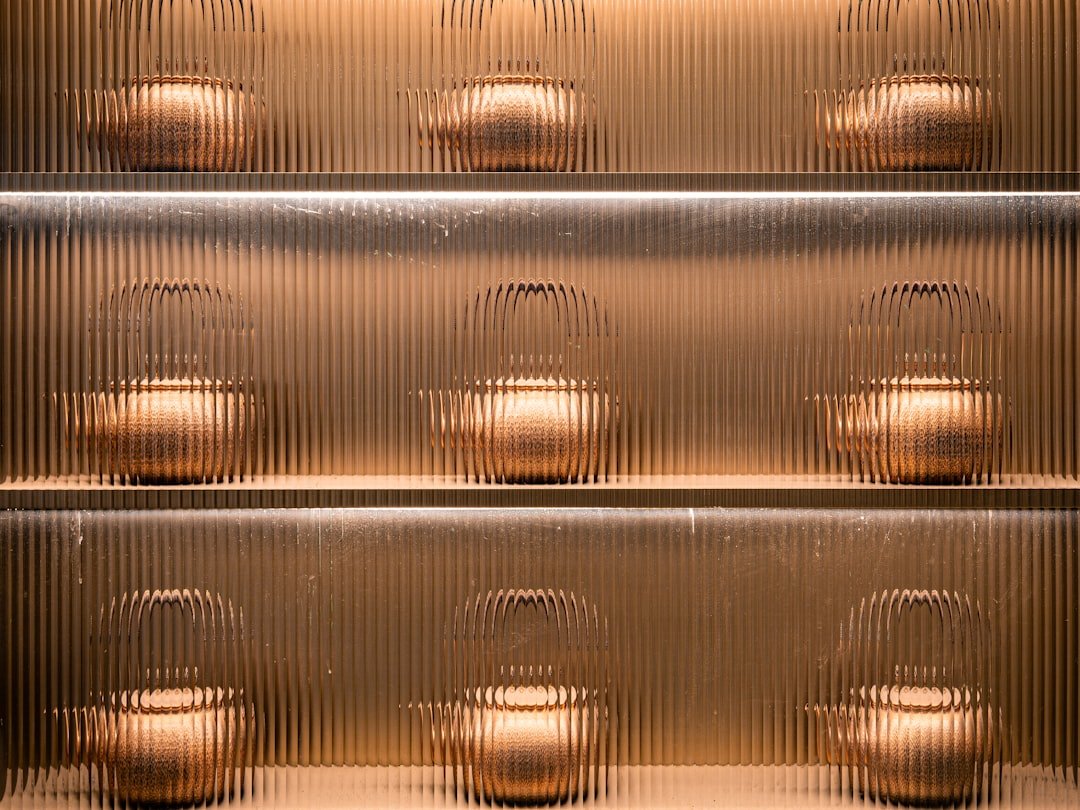
Kitchen storage solutions have evolved significantly as homeowners prioritize both functionality and aesthetics in their design choices. Open shelving and closed cabinets represent two distinct approaches to kitchen organization, each offering specific benefits and limitations. Open shelving creates visual openness and provides immediate access to stored items, while closed cabinets offer concealed storage and protection from dust and grease.
Modern kitchens function as multi-purpose spaces that extend beyond food preparation to include dining, socializing, and entertainment areas. This expanded role influences storage decisions, as homeowners must balance practical storage needs with visual appeal. The selection between open shelving and closed cabinets affects multiple factors including spatial perception, maintenance requirements, storage capacity, and overall design cohesion.
Understanding the practical implications of each storage method enables homeowners to select solutions that match their cooking habits, organizational preferences, and design objectives. Factors such as kitchen size, usage patterns, and maintenance tolerance play crucial roles in determining the most suitable storage approach for individual households.
Open shelving has gained popularity for its ability to create an inviting atmosphere in the kitchen. One of the primary advantages of open shelving is accessibility. With dishes, glassware, and cooking essentials displayed prominently, users can quickly grab what they need without rummaging through cabinets.
This ease of access can be particularly beneficial for those who frequently entertain guests or cook regularly. Additionally, open shelves can serve as a canvas for personal expression; homeowners can showcase their favorite dishware, cookbooks, or decorative items, adding character and warmth to the kitchen. However, open shelving is not without its drawbacks.
One significant concern is dust accumulation. Unlike closed cabinets that protect items from airborne particles, open shelves require regular cleaning to maintain their aesthetic appeal. This can be particularly challenging in kitchens where cooking activities generate grease and splatter.
Furthermore, open shelving may not be suitable for every household; families with young children or pets may find it difficult to keep fragile items safe from curious hands or paws. The visibility of clutter can also be a downside; if shelves are not organized meticulously, they can create a chaotic appearance that detracts from the overall design.
Pros and Cons of Closed Cabinets
Closed cabinets offer a classic solution for kitchen storage, providing a clean and organized look that many homeowners appreciate. One of the most significant advantages of closed cabinets is their ability to conceal clutter. By hiding away dishes, cookware, and pantry items, closed cabinets create a streamlined appearance that can make even the smallest kitchens feel more spacious.
This feature is particularly advantageous for those who prefer a minimalist aesthetic or have limited storage space. On the flip side, closed cabinets can present challenges in terms of accessibility. Items stored in cabinets may require opening multiple doors to find what you need, which can be inconvenient during busy cooking sessions or when entertaining guests.
Additionally, closed cabinets can sometimes feel heavy or oppressive in a kitchen space, especially if they dominate the room’s design. Homeowners may also find themselves limited in terms of showcasing their favorite items or personal style, as the contents remain hidden behind doors.
When it comes to design and aesthetics, open shelving and closed cabinets offer distinct visual experiences that cater to different tastes. Open shelving tends to evoke a sense of openness and airiness in a kitchen. It allows for creative displays that can transform functional storage into an artful arrangement.
For instance, a well-curated collection of colorful dishes or vintage glassware can serve as a focal point in the room, drawing the eye and adding personality to the space. The use of open shelves can also enhance natural light flow, making the kitchen feel larger and more inviting. In contrast, closed cabinets provide a more traditional and polished look that appeals to those who prefer a cohesive design.
They can be customized with various finishes, colors, and hardware options to match the overall theme of the kitchen. Closed cabinets can also contribute to a sense of orderliness; when everything is tucked away behind doors, the kitchen maintains a clean and sophisticated appearance. This is particularly beneficial in smaller kitchens where visual clutter can quickly overwhelm the space.
Ultimately, the choice between open shelving and closed cabinets will depend on individual preferences regarding style and how one wishes to express their personality through their kitchen design.
Practicality and functionality are crucial factors when deciding between open shelving and closed cabinets in kitchen design. Open shelving excels in terms of convenience; items are easily accessible without the need to open doors or drawers. This feature is especially advantageous for those who frequently use specific dishes or cooking tools, as they can be arranged within arm’s reach.
Additionally, open shelves can be installed at various heights to accommodate different needs, allowing homeowners to customize their storage solutions based on their cooking habits. However, practicality must also consider the potential downsides of open shelving. The lack of doors means that items are exposed to dust and grease, necessitating regular cleaning to keep them looking their best.
Furthermore, open shelving may not be ideal for storing items that require protection from light or humidity, such as certain spices or specialty ingredients. In contrast, closed cabinets provide a more practical solution for storing these types of items while keeping them out of sight.
Maintenance and cleaning are essential considerations when evaluating open shelving versus closed cabinets. Open shelves require consistent upkeep to prevent dust buildup and maintain an organized appearance. Homeowners must regularly wipe down surfaces and ensure that items are neatly arranged to avoid a cluttered look.
This maintenance routine can be time-consuming for those with busy lifestyles or larger families who use their kitchens frequently. On the other hand, closed cabinets offer a more low-maintenance option since they protect contents from dust and spills. The interior of cabinets can be cleaned less frequently than open shelves since items are shielded from airborne particles.
However, it is important to note that while closed cabinets may require less frequent cleaning on the outside, they still necessitate occasional organization and cleaning on the inside to prevent clutter from accumulating over time.
Cost is another critical factor when comparing open shelving and closed cabinets in kitchen design. Generally speaking, open shelving tends to be more budget-friendly than closed cabinetry options. Shelves can be constructed from various materials—such as wood, metal, or glass—and often require less material than full cabinet systems.
Homeowners looking for an economical solution may find that installing open shelves allows them to allocate funds toward other kitchen upgrades or decorative elements. Conversely, closed cabinets typically involve higher costs due to their construction complexity and material requirements. Custom cabinetry can significantly increase expenses, especially if homeowners opt for high-end finishes or intricate designs.
However, investing in quality closed cabinets may yield long-term benefits in terms of durability and functionality. Homeowners should weigh these cost considerations against their specific needs and preferences when deciding which option best suits their budget.
Choosing the Right Option for Your Kitchen
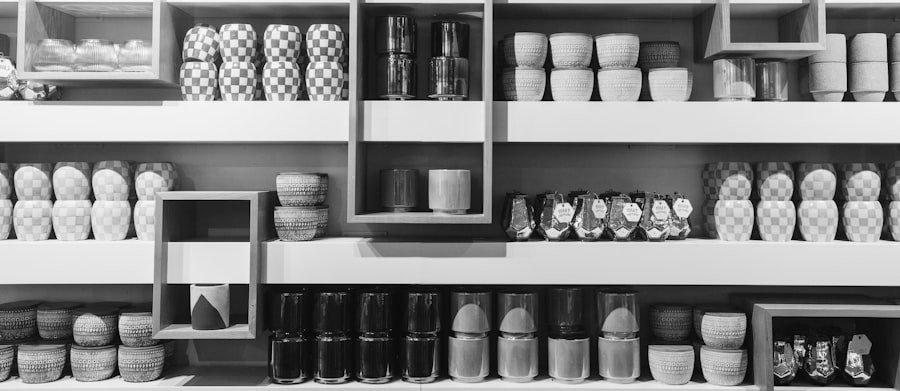
The decision between open shelving and closed cabinets ultimately hinges on individual preferences regarding style, functionality, maintenance requirements, and budget constraints. Each option presents unique advantages and challenges that cater to different lifestyles and design aesthetics. By carefully considering these factors—along with how they align with personal needs—homeowners can create a kitchen space that not only meets their practical requirements but also reflects their personal style and enhances their overall living experience.
FAQs
What are the main differences between open shelving and closed cabinets?
Open shelving is a storage option where shelves are exposed without doors, allowing easy access and visibility of items. Closed cabinets have doors that conceal the contents, providing a tidier appearance and protection from dust.
Which option is better for kitchen storage: open shelving or closed cabinets?
The choice depends on personal preference and kitchen style. Open shelving offers quick access and display opportunities but requires frequent organization. Closed cabinets keep items hidden and protected, ideal for a clutter-free look.
Are open shelves more difficult to maintain than closed cabinets?
Yes, open shelves typically require more frequent cleaning and organizing since items are exposed to dust and must be kept visually appealing. Closed cabinets protect contents from dust and reduce the need for constant tidying.
Can open shelving be used in small spaces?
Yes, open shelving can make small spaces feel larger and more open by eliminating bulky cabinet doors. However, it requires careful organization to avoid a cluttered appearance.
Do closed cabinets offer better protection for stored items?
Yes, closed cabinets protect items from dust, moisture, and potential damage better than open shelving, making them suitable for storing fragile or less frequently used items.
Is it possible to combine open shelving and closed cabinets in one space?
Absolutely. Many designs incorporate both to balance aesthetics and functionality, using open shelves for display and easy access, and closed cabinets for concealed storage.
Which option is more cost-effective: open shelving or closed cabinets?
Open shelving is generally more cost-effective because it requires less material and simpler construction. Closed cabinets tend to be more expensive due to doors, hardware, and additional finishes.
How does lighting affect open shelving compared to closed cabinets?
Open shelving benefits from good lighting to highlight displayed items and enhance the space’s look. Closed cabinets do not require internal lighting as contents are hidden, though interior lights can be added for convenience.
Are open shelves suitable for all types of items?
Open shelves are best for items that are visually appealing and frequently used, such as dishes, cookbooks, or decorative pieces. Closed cabinets are better for storing less attractive or infrequently used items.
What styles of interior design work best with open shelving versus closed cabinets?
Open shelving complements modern, industrial, farmhouse, and minimalist styles by creating an airy, open feel. Closed cabinets suit traditional, classic, and contemporary designs that favor clean lines and concealed storage.